
6 Unique New Year’s Traditions from around the World
The new year is a wonderful time to reset, learn, and grow as a family. This year, why not expand your children’s horizons and celebrate in international style with New Year’s traditions from around the world? Take a tour through Spain, Brazil, Russia, and more to learn how different countries and cultures usher in the new year.

6 New Year’s Eve Traditions
Spain: Doce Uvas de la Suerte
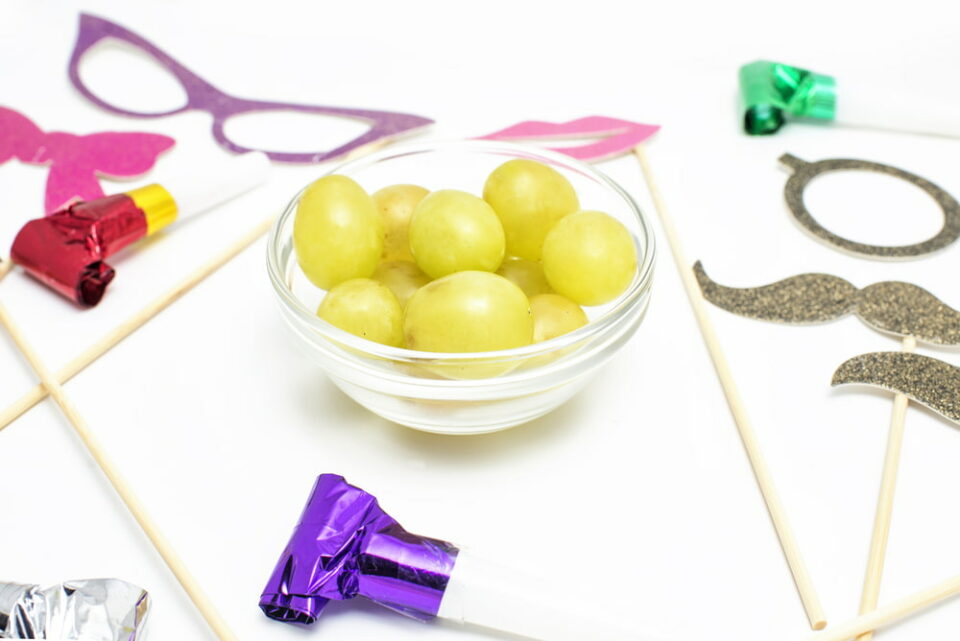
At the stroke of midnight on New Year’s Eve, many Spaniards gather with their loved ones inside warm homes and in town squares to watch the clock and devour las doce uvas de la suerte, or “the twelve grapes of luck.” Each grape represents a month of the coming year, and according to tradition, eating one grape at each chime of the clock at midnight guarantees a lucky year.
It’s unclear how this Spanish tradition developed, though a common story says that grape farmers in Alicante (a city in the Valencian Community, Spain) created the custom in the 1900s to sell more grapes after a surplus harvest. No matter how it started, this tasty tradition is still popular today. If you’re in Madrid on New Year’s Eve, expect to see a crowd of people with grapes in their hands at the city’s busy central square, La Puerta del Sol, as its famous clock tower counts to midnight for the entire country.
Greece: Hanging Onions and Hurling Pomegranates
Some elements of a Greek New Year’s Eve are similar to other parts of the world. People gather with their friends and family to play cards, board games, and dice, or they head to Athens to watch beautiful fireworks displays over the Acropolis. But there’s one tradition in Greece you’re unlikely to find anywhere else: onions hanging on front doors.
In Greece, onions symbolize growth and rebirth. Families typically hang them from the front door or inside their homes after attending church services on New Year’s Eve to ensure the year ahead is filled with prosperity and growth.
And onions aren’t the only produce that plays a key role in Greek New Year’s traditions. Many Greek people also participate in a ritual known as Podariko, which roughly translates to “good foot.”
Families decide who will be the first person to walk through their door after the clock strikes midnight on New Year’s Day. This person should be someone with good fortune, as it’s believed they will bring good luck to the home. The lucky person must enter the house with their right foot first—tradition dictates the right leg brings prosperity and happiness.
As soon as the lucky person passes the threshold, the homeowners need to step on something made of iron to ensure their family is as strong as the metal in the coming year. Finally, someone pure of spirit (usually a child) takes down a pomegranate that has been hanging on the front door all holiday season and smashes it. The more the seeds scatter, the more luck the family will have!

Brazil: Copacabana Beach and Lemanjá
Rio de Janeiro is the place to be for Ano Novo (New Year’s) in Brazil. As the year comes to a close, millions of people dressed in white gather at Copacabana Beach to send a New Year’s wish to Iemanjá, the Candomblé goddess of the sea. Lemanjá is a central deity in the Candomblé faith (an Afro-Brazilian religion with around 2 million followers today). She is said to grant wishes on New Year’s Eve to those who send offerings of flowers and gifts to the ocean on small blue and white wooden boats. If your boat makes it out to sea without washing up on shore, it’s believed that Iemanjá accepted your offering and granted your wish. After the offerings, the celebration ends with a spectacular firework show that lights up the sky.
Japan: Eating Soba Noodles
Japan can be chilly in December, with average temperatures around 43℉ (6℃), so it’s no surprise that a comforting dish like toshikoshi soba (New Year’s Eve noodles) is part of the country’s holiday tradition.
Omisoka, or New Year’s Eve, is the time many people welcome the Shinto god of the new year, Toshigami. Observers put out traditional decorations such as potted bundles of bamboo and pine called kadomatsu and thick ropes made from rice straw called shimenawa. At midnight, Buddhist temples ring a bell 108 times. Soba breaks easily when bitten, which tradition says signifies a clean break and a fresh start from the old year’s troubles. Eating a bowl of soba on New Year’s Eve is said to bring good fortune in the year ahead—just don’t eat it while the bells are ringing. The clean break must happen before or after midnight, or else it’s bad luck!
United States: Watching the Ball Drop
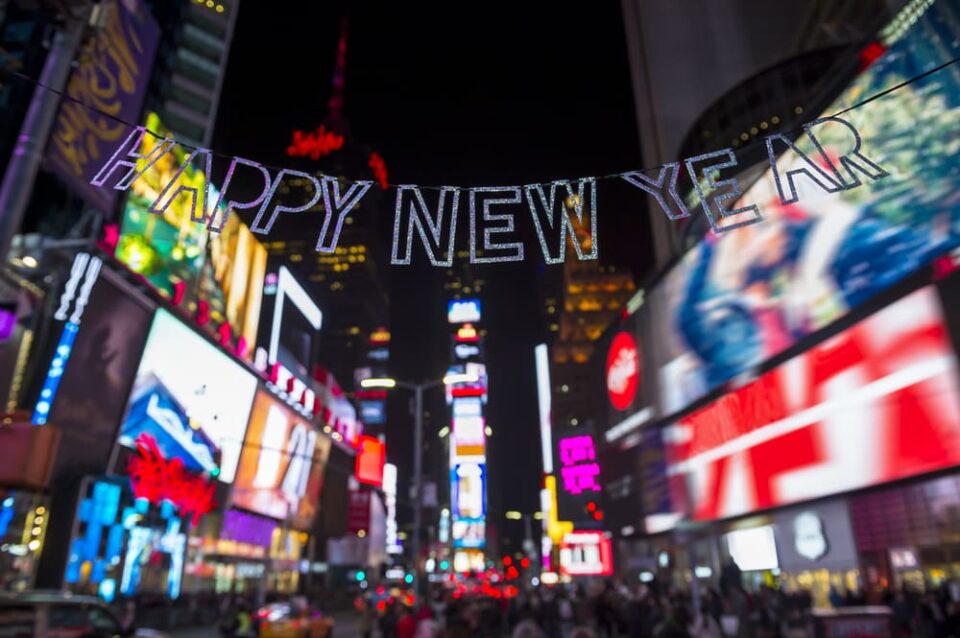
If there’s a TV on during New Year’s Eve in the U.S., it’s probably tuned in to Times Square in New York City. Every year on December 31, a 12-foot, 11,875-pound ball covered in Waterford Crystals and sparkling with LEDs drops from a flagpole on the roof of One Times Square. This tradition started in 1907 with an iron-and-wood ball decorated with light bulbs, and has since become one of America’s favorite ways to welcome the new year.
The event is a massive New Year’s celebration—there are celebrity performances, an estimated one million people dancing together in Times Square, and more than one billion people watching the New Year’s Eve ball drop on television around the world. The ball lights up at 6 p.m., slowly dropping to the base of the pole right as the clock strikes midnight.
Denmark: Breaking Plates
Ever wondered what to do with a chipped mug? In Denmark, they have a rather smashing solution: Save those broken dishes for New Year’s Eve. To close out the year and welcome the new one, many Danish people break crockery, such as old plates and glasses, against their friends and family members’ front doors—the tradition is said to bring them good luck. The more broken plates on your porch in the morning, the better your luck will be (and the more people who care about you), or so the legend goes.
Discover More Traditions with the World Edition Subscription Box
Whether you spend a typical New Year’s Eve home with the kids eating grapes and noodles or having a dance party and breaking plates, incorporating one of these fascinating international New Year’s traditions into your celebrations can inspire your young ones to grow curious about new places and cultures.
Learning more about our world is a meaningful New Year’s resolution—and our World Edition subscription is a fantastic place to start. Each month, your children will explore a new country through activities, recipes, crafts, and more! Kids can get a taste of meals, games, and even holidays (like the Lunar New Year) from places they’ve never been to. It’s the perfect way for young adventurers to experience the world from home. Check out the World Edition subscription box (or Early Explorers for younger kids) and make the upcoming year one full of adventure!